For years, people in Kolding have heard the same thing again and again — that the harbour would be shut down, moved, or transformed into something new.
The truth is more complex: the municipality has the legal power to make it happen — if it chooses to follow the proper process. What’s missing isn’t authority, but political will & determination.
This isn’t about blame. It’s about understanding what happened, what the law allows, and why the future of Kolding Havn matters to all of us who care about our city.
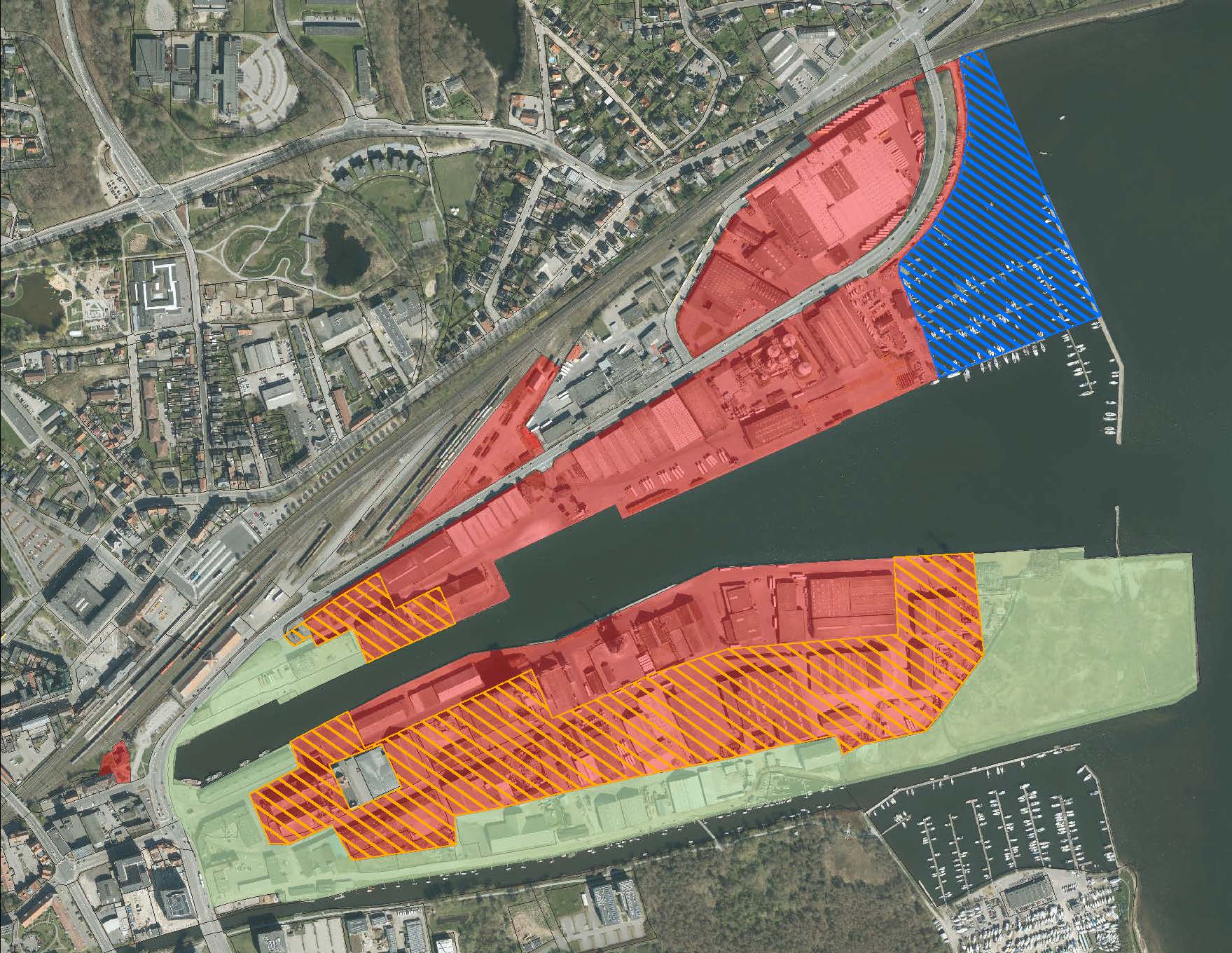
Few local issues have created as much discussion as the question of Kolding Havn’s future. Should it move? Should it close? Or should it become part of a new urban waterfront?
To many residents, it feels like déjà vu — promises one year, silence the next, and decisions made somewhere out of sight.
Kolding Municipality Has the Power, But Not the Will, to Close Kolding Port
What really happened
2018 – A political promise, not a legal decision
In November 2018, Kolding City Council reached a political agreement to phase out the commercial port by 2043. It sounded like a turning point — but it was never a legally binding decision.
“Byrådet besluttede at udfase erhvervshavnen frem mod 2043.”
“The City Council decided to phase out the commercial harbour towards 2043.”
There were no public hearings, no approval from the Ministry of Transport, and no legal foundation. It was a signal of intent, not an enforceable plan.
2019 – The plan quietly fades away
Just a year later, then-mayor Jørn Pedersen (Venstre) said openly:
“Beslutningen om lukning af havnen er ikke længere gældende.”
“The decision to close the port is no longer valid.”
(Source: Maritim Danmark, 11.12.2019)
The agreement that once sounded “historic” slowly disappeared. Political unity was gone, and so was the closure plan.
2020 – A new direction
In 2020, the City Council adopted a new Ejerstrategi for Kolding Havn (Ownership Strategy). This time, the goal changed from closure to coexistence.
“Erhvervshavn, by og fjord skal bindes sammen i en udvikling af havneområdet.”
“The commercial port, the city, and the fjord must be bound together in the area’s development.”
(Source: Kolding Kommune, Ejerstrategi 2020)
The word closure disappeared. The harbour and the city were now meant to grow together.
2024–2025 – Secrecy and election pauses
In 2025, the harbour returned to the political agenda — this time behind closed doors. Enhedslisten complained to Ankestyrelsen (the national supervisory authority), arguing that the City Council’s negotiations lacked transparency.
“Byrådet forhandler i al hemmelighed om Kolding Havns fremtid.”
“The City Council is negotiating the future of Kolding Port in complete secrecy.”
(Source: Kolding Netavis, 2025)
Shortly before the election, four mayoral candidates — Venstre, Socialdemokratiet, SF, and Dansk Folkeparti — announced that all harbour decisions would be paused until after the vote.
“Fire borgmesterkandidater i Kolding vil sætte havnen på pause.”
“Four mayoral candidates in Kolding will put the harbour on hold.”
(Source: dknyt.dk, 14.10.2025)
For many citizens, it felt like the same story once more — big promises, then another pause.
What the law actually says
Under Havneloven (the Danish Harbour Act), Kolding Havn is a kommunal selvstyrehavn — a municipally owned but independent port.
“En kommunal selvstyrehavn ejes af kommunen, men drives som en selvstændig enhed med egen bestyrelse.”
“A municipal autonomous port is owned by the municipality but operated as an independent entity with its own board.”
(Havneloven §2)
This means the municipality cannot simply vote to shut the port down. The process requires:
- A formal closure decision,
- Approval from the Ministry of Transport,
- A public consultation involving affected citizens and businesses, and
- A legal liquidation of the port’s assets and obligations.
None of this has happened. So while politicians have talked about closing the port, they’ve never had the authority to do it — at least not on their own.
What other cities did differently
It’s often said that closing or transforming a harbour is too complicated. Kolding isn’t the first Danish city to face this question — but several Danish cities have already done it successfully by choosing clearer paths and stronger cooperation, and without losing their local identity.
Aarhus
Aarhus spent two decades turning its industrial port into Aarhus Ø, a thriving waterfront of homes and cafés. The change worked because it was planned together — with the state, investors, and citizens.
Odense
Odense moved its industry to Lindø Port and transformed the old docks into Byens Ø, a cultural and educational district that brought people closer to the water.
Aalborg
Aalborg found a balance — industry on one side, new housing and leisure on the other — creating a mixed-use harbour that works for everyone.
All these cities shared one thing: they worked transparently, involved their residents early, and built realistic long-term plans. Kolding’s discussions, by contrast, have come and gone in cycles — full of ideas, but short on follow-through.
“The law is the same for all cities. The difference is not in legislation — it’s in leadership.”
Why this still matters
- Environment & traffic: Heavy trucks on city streets bring noise and pollution. Moving industrial activity outside town could improve air quality and safety.
- Urban development: The harbour area is some of Kolding’s most valuable land. Carefully redeveloped, it could become a beautiful public waterfront.
- Business modernization: A greener logistics hub near the motorway could serve both companies and the environment better.
This isn’t about being for or against the harbour — it’s about shaping progress in a way that makes sense for people, business, and nature alike.
What citizens deserve
Citizens deserve openness and honesty — not shifting messages every few years.
Politics is not about hiding behind collective agreements — it’s about taking responsibility.
Decisions that shape Kolding for the next 50 years should never be made behind closed doors. They should be shared, debated, and built together. Kolding Port belongs to the people of Kolding – not to special interests.
Timeline overview
| Year | Event | Status |
|---|---|---|
| 2018 | Political agreement to phase out the port by 2043 | Political – not legal |
| 2019 | Mayor Jørn Pedersen cancels the plan | Abandoned |
| 2020 | New ownership strategy focuses on coexistence | Port continues |
| 2025 | Enhedslisten files complaint about secrecy | Case pending |
| Oct 2025 | Four mayoral candidates pause decisions | No change before election |
Kolding Havn is still here — not because anyone broke the law, but because we, as a city, never finished the conversation.
For seven years, we’ve circled the same promises while other Danish cities have opened their waterfronts and moved forward.
Maybe this is the time to look ahead — with less politics and more honesty. Because progress starts when everyone can see the same truth. And that truth is: we can’t move forward until we decide where we stand.
Transparency Statement
All information in this article is based on publicly available documents and reputable Danish media sources, including Kolding Kommune’s own publications. The article represents a good-faith analysis of public decisions concerning Kolding Havn. Any party or individual mentioned is welcome to offer clarifications or perspectives, which will be added to maintain full transparency and accuracy.
Sources
- Lov om havne (LBK nr. 1219 af 5/10/2016) – §§ 2–5, 14–15
- Dansk Industri Blog (13 June 2019) – “Der er endnu ikke en udløbsdato på Kolding Havn”
- Maritim Danmark (11 Dec 2019) – “Borgmester aflyser havnelukning i Kolding”
- Kolding Kommune (24 Nov 2020) – Ejerstrategi for Kolding Havn (PDF)
- Kolding Netavis (2025) – “Enhedslisten klager til Ankestyrelsen over Kolding Byråd”
- dknyt.dk (14 Oct 2025) – “Fire borgmesterkandidater i Kolding vil sætte havnen på pause”
- Aarhus Kommune – Udviklingsplan for Aarhus Ø
- Odense Kommune – Byens Ø & Lindø Havn Redevelopment Plan (PDF)
- Aalborg Kommune – Nordhavnen Masterplan / Port-City Regeneration Case (PDF)